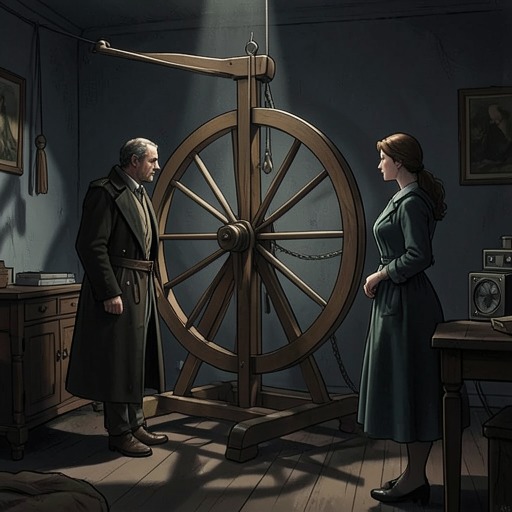
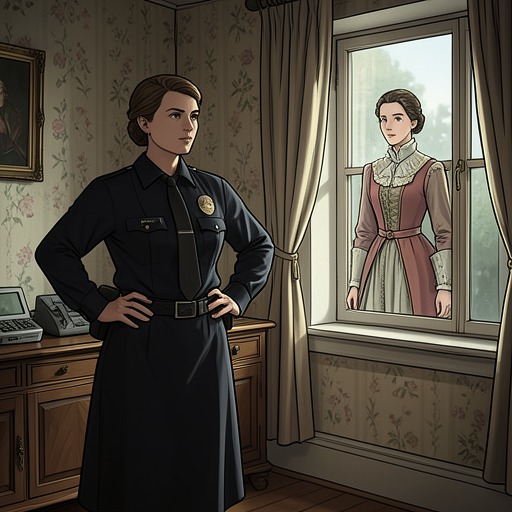
Marie Delmas and Ottilie reunite
The Glass RoomMarie Delmas and Ottilie reunite in the Glass Room after a separation shaped by war, displacement, and the passage of time. Their recognition transforms a room presented as an ageless monument into the place where two people recover a shared past: Marie remembers having lived there with her mother, and the adult who approaches her identifies herself as Ottilie, the child Marie once knew.
The past returns through the body
The recognition begins not as a composed account but as a physical interruption. Marie has to steady herself with a hand and then sits down. When an attendant tells her that sitting is forbidden, an American visitor notices her distress and asks whether she is all right. Marie shakes her head, brushes tears from her eyes, and says that her mother is there inside her head, as if she were trying to shake her out. Memory arrives before Marie can arrange it into a story: the house has become present again, and her mother’s remembered presence accompanies it.
The American visitor offers her a shoulder and a moment to rest. Marie says that she is all right, tries to rise, and sits back down. She then explains that she lived there many years earlier with her mother, who worked as a nanny. Her fragmented recollection narrows toward the children in the household, and she names them: Ottilie and Martin. What first appears to the visitor as an episode of disorientation becomes evidence that Marie belongs to the house’s history.
Names establish a shared history
The name Ottilie changes the encounter. The American woman’s expression shifts into confusion as she asks whether Marie is Marika. Marie, surprised, asks how she knows Marika. The exchange joins identities across time: Marie has spoken from an older life and an earlier name, while the visitor has recognized her through the name associated with that past. The recognition is not effortless or complete; each woman must test what the other knows before their shared history can be spoken aloud.
The visitor then kneels and takes Marie’s hands. She says that she is Ottilie. The claim seems impossible to the narrative’s remembered perspective: Ottilie is still a child in Marie’s recollection, around twelve years old and seemingly fixed in the distant past. Yet the woman before Marie asserts that identity while laughing and crying at once. Her weather-beaten face, polished skin, and dyed hair make the distance between the remembered child and the present adult visible, but do not undo the continuity her name declares.
The room becomes a place of reunion
The meeting takes place inside the Glass Room, whose rectilinear frame and handling of light have made it seem to deny time. In the moment of recognition, that architectural image is unsettled. Marie’s memories give the room a human history, while Ottilie’s appearance makes its apparent timelessness coexist with the aging and separation of the people who once lived there. The house is no longer only a preserved object or a formal composition; its past is active in the room through names, touch, tears, and recollection.
The reunion also reverses the scene’s initial imbalance. Marie is first treated as a visitor who has sat where sitting is forbidden and cannot explain her distress to the guide. The American woman’s sympathetic attention gives her space to tell what the building has brought back. Once Marie names Ottilie and Martin, the visitor is no longer merely an onlooker: she becomes the person whose own identity connects Marie’s remembered life to the present. By taking Marie’s hands and insisting that she is Ottilie, she turns a private memory into a mutual recognition.
Recognition without erasing loss
The encounter offers recognition, not restoration of the years that separate the women. Marie’s mother remains present only in memory, and the child she recalls is now an adult whose appearance bears the passage of time. Laughter and crying arrive together, holding the shock and relief of the moment without making it simple. The two women can identify one another through the names of Ottilie and Martin and through the name Marika, but the scene does not pretend that recognition returns them to the life they shared before the war.
Around them, the Glass Room continues to suggest balance, reason, and a frame seemingly untouched by time. The reunion exposes the limits of that ideal: a room may appear ageless, but its meaning is made by lives that have been interrupted and carried elsewhere. Marie and Ottilie’s recognition makes the house vibrate with the human past that a museum-like account would leave behind. Their meeting is therefore both personal and architectural: the place becomes alive again because its history is recognized by the people who once belonged to it.